Dual Language Kindergarten- Third Grade
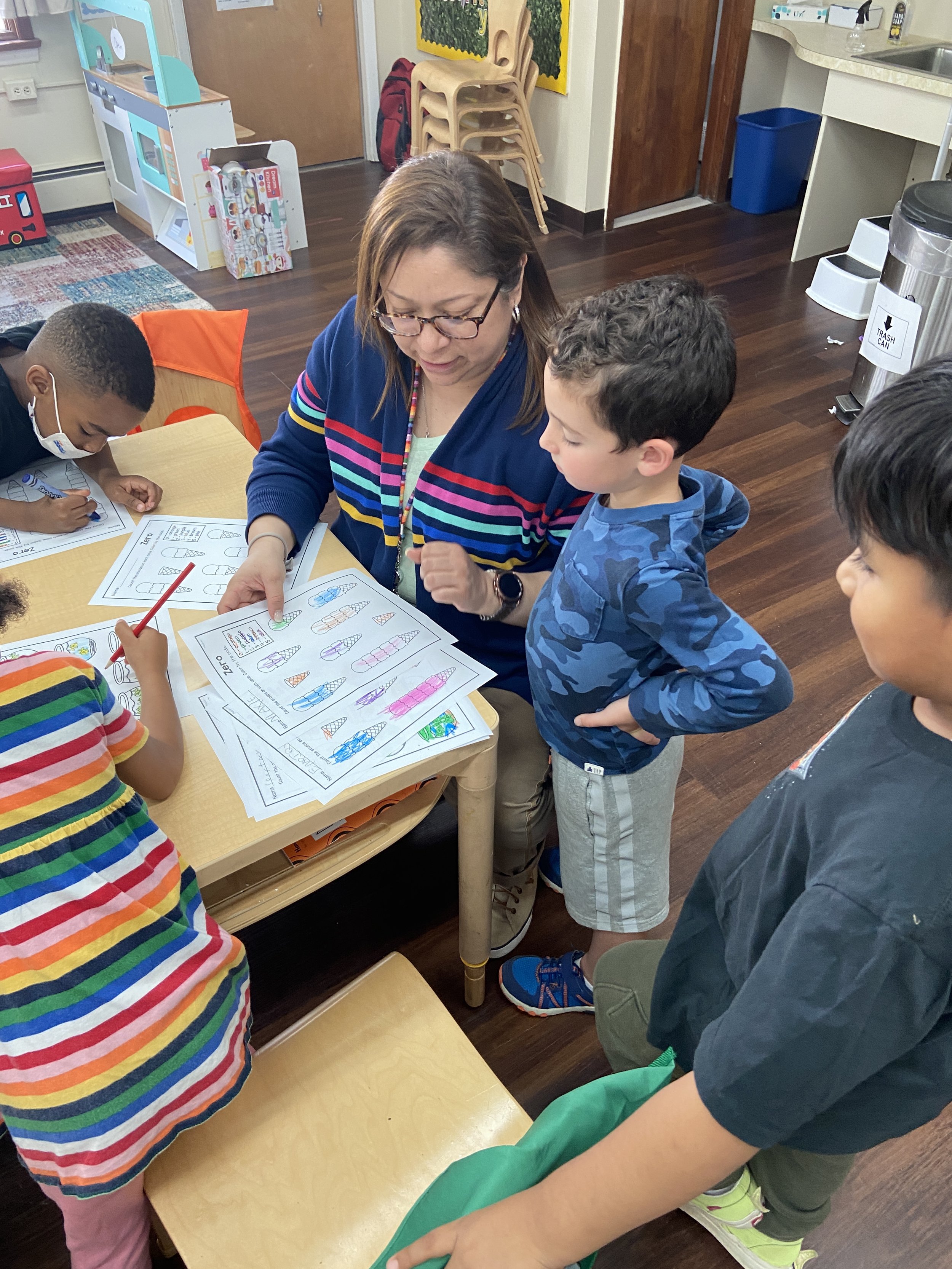
Kindergarten exists at the critical juncture where emergence meets empowerment, and children see not only that there is an outside world beyond their immediate reality, but also that they have a place in it, a role to play, and a voice. They go from being consumers of information to critical thinkers through the use of two crucial, life-altering concepts, “why” and “I think”. It is in the approach to their introduction and development that Westbury Friends differentiates itself from other programs. The Kindergarten educational experience at Westbury Friends centers on its dual language program. True to its belief in experiential learning, Spanish instruction is not based upon rote memorization of vocabulary and conjugations but rather true cultural immersion. Students come to learn the language, societal norms, and history through dramatic play, literature, dance, and the culinary arts. Spanish is not learned incrementally but rather mastered while learning science, math, social studies, and language arts.
The benefits of a dual language program extend far beyond learning a second language. Currently, thirty-nine states in the United States offer dual language programs, and over half of the world’s population speaks at least two languages. Studies have empirically shown that students introduced to such a program in first grade outperform their monolingual peers on tests of cognitive function in both adolescence and adulthood. They display heightened executive functioning, improved attentional control, and increased working memory. A keenly honed working memory results in greater problem-solving skills, which afford a broader aptitude and capacity for knowledge acquisition.
Language is at the core of identity. How the individual relates to one’s past, family, culture, and upbringing is expressly encoded in language. A dual language program seizes upon children’s propensity for language acquisition, affording them greater capacity for self-expression and resulting in improved self-esteem. A second language improves communication skills as students learn how language works, how to form sentences, which words to use, and how to be clearly understood by an audience. The secondary language does not supplant the native language but rather builds upon it.
The benefits of a dual language education resonate throughout an individual student’s entire educational career.
A dual language program not only intellectually prepares an individual to take on a global leadership role but also emotionally prepares them. Students in a dual language program develop a strong sense of cultural awareness and cultural sensitivity. This exposure to cultures beyond their own increases both curiosity and empathy. The resulting individual is not only proficient in another language but also socio-culturally competent in building a wide variety of relationships. This, in turn, opens doors around the world, as students can interact with other cultures using their linguistic skills. A dual language education is not only useful but essential to a student’s education as a whole.