
Nursery
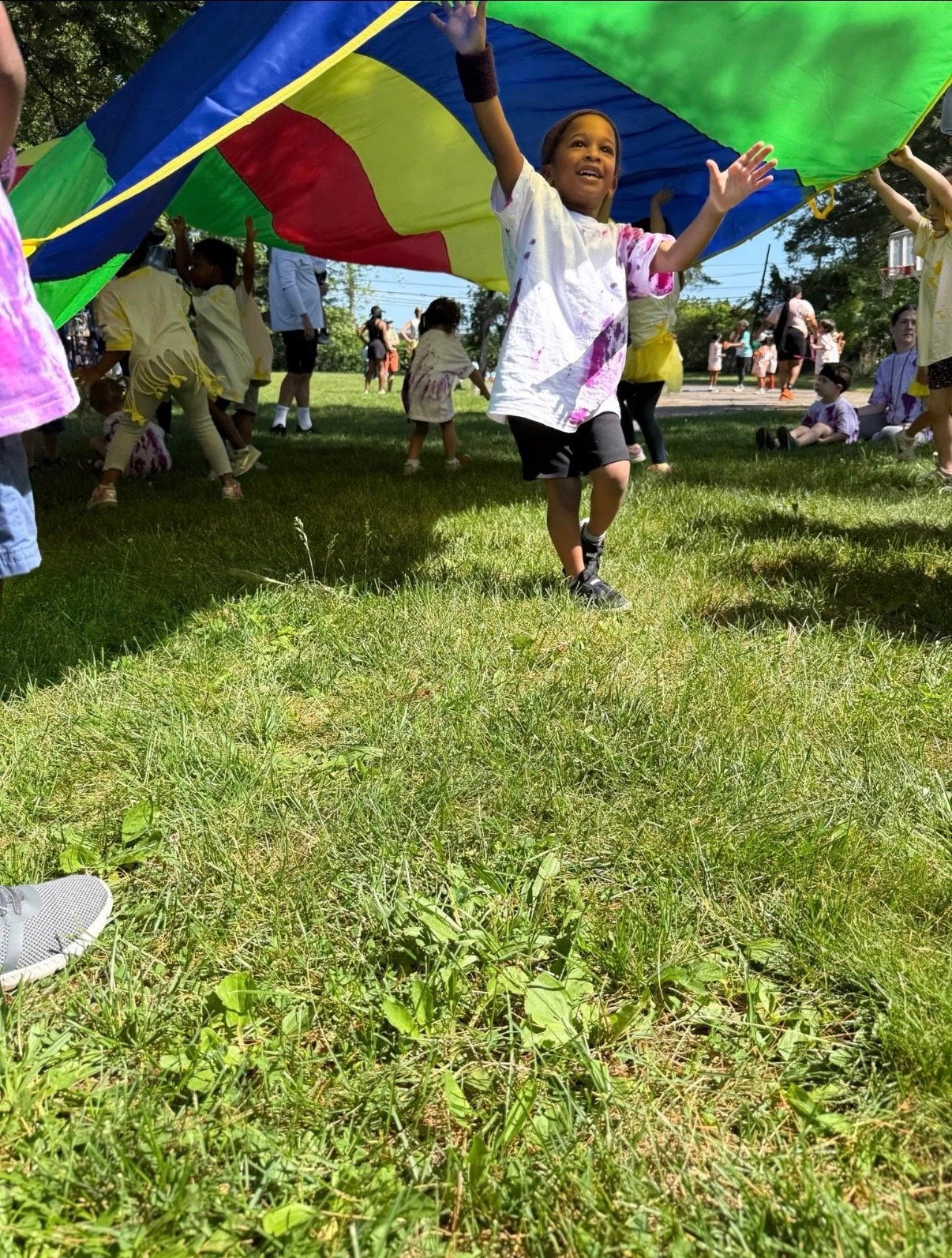

Play is the Work of Children
Supports All Areas of Development
Various Activities
Numerous Learning Opportunities
The Nursery program and environment are carefully designed to support all areas of development. The classroom is the workshop, allowing each child to move fluidly through a variety of activities. They encounter numerous learning opportunities that help strengthen their self-direction and decision-making skills. The ‘play-based’ day provides ample opportunity for the social, physical, intellectual, creative, emotional and spiritual dimensions in each child to develop and thrive.
The nursery classroom is a community- a place where learning occurs through positive relationships between and among children and adults. Children learn the skills they need to make friends, solve social problems, share and care, and establish the values and behaviors necessary for a well-rounded individual. In this nurturing environment, each member is a learner and a teacher.
For your child to be successful in school and in life, they need to have strong communication skills. These skills include both speaking and listening.
At this age, your child will practice communication by expressing their needs and wants, participating in group activities, and asking questions about what they’re learning. They’ll also have the opportunity to talk about their thoughts and feelings.
The Nursery curriculum is based on an understanding of how children develop and grow. Three-year-olds are often described as being in transition. They are moving from toddlerhood into a newfound ability to express themselves through ideas and words. They are beginning to trust others outside their family and to seek independence and self-control. They are asserting themselves socially and observing the world around them. They are experimenting with their surroundings and delighting in noting cause and effect. In addition, three-year-olds are changing physically, growing in their agility and coordination.
Being aware of this, the Nursery program at WFS is designed to support these areas of development. As each child moves fluidly through classroom centers, strengthening their self-direction and decision-making skills, they will encounter numerous learning opportunities. Designed and equipped to strengthen each child's social, physical, intellectual, creative, and emotional development, the ‘play-based’ day provides ample opportunities for them to grow.
The Nursery classroom is a community – a place where learning occurs through positive relationships between and among children and adults. Children learn the skills they need to make friends, solve social problems, share and care, and establish the values and behaviors necessary for a well-rounded individual. In this nurturing environment, each member is a learner and a teacher.
This general information about the program and learning goals and objectives for Nursery students helps parents set reasonable expectations for their child, while recognizing that each child develops at their own pace. Each child will move through the curriculum at their own pace, as childhood is a journey, not a race!
Language Arts
Nursery students are still practicing language, so this is a year when the focus is on language development. Some three-year-olds enter Nursery speaking only in single words; others use full descriptive sentences. By the end of the year, students can communicate their wants, needs, and feelings and use keywords like “please,” “thank you,” and “excuse me.” Nursery students are exposed to letters in a text-rich environment, and language development is stimulated through a multisensory approach.
Mathematics
Manipulative, hands-on experiences are key to introducing and understanding basic math concepts for a Nursery student. Students are helped to see math all around them in the form of numbers, words, activities, patterns, sequences, sorting and classifying, and myriad other concepts that encompass mathematical thinking.
Science and Social Studies
The Nursery Science curriculum is an exploration of the world around them. Three-year-olds discover their world through a total sensory approach. The classroom, home, the outdoors, and basically every environment in which they exist are their laboratory, and their five senses are the tools through which they develop an understanding of the real world. Physical Science (the physical properties of objects and materials, for example, sweet/salty, squishy/hard/soft), Life Science (plants, animals, the five senses, human body, etc.), and Earth Science (environments and nature) are all interwoven into the Nursery science curriculum. The Nursery Social Studies curriculum explores the everyday life of three-year-olds within their classroom, school community, and family.
Music and Movement
Music instruction in the Nursery class is designed to expose and familiarize students with a wide range of musical experiences. This is accomplished through listening, reading, playing instruments, singing, and creative movement. All these areas are used together to give each student the fullest possible musical experience every day.
Art
Art opportunities present themselves daily in the Nursery program and help to develop key fine motor skills. Some of these activities include, but are not limited to:
Painting with brushes and finger paints
Drawing with crayons, chalk, pencils, markers, etc.
Collage making
Pasting and gluing
Printmaking with various objects
Recyclable Art Projects
Group murals and group 3D creations
Working with play dough
Wood sculpture
All of these experiences focus on providing Nursery students with ways and means to express their ideas, observations, and feelings through their art. It is the process of art, not the final product, that is important in the Nursery class. Students typically cook once per week as well.
Social/Emotional Development
Nursery students are learning to trust that the adults in their world will take care of them. Trust gives them confidence to become independent and, in turn, to feel pride at being able to accomplish something on their own. They are becoming increasingly able to express themselves through words and ideas, thereby opening up a new and exciting social world to explore and enjoy.
“Children need the freedom and time to play. Play is not a luxury, it is a necessity.”


-Kay Jamison